
Roanoke Commute Guide: Getting Around After the Move
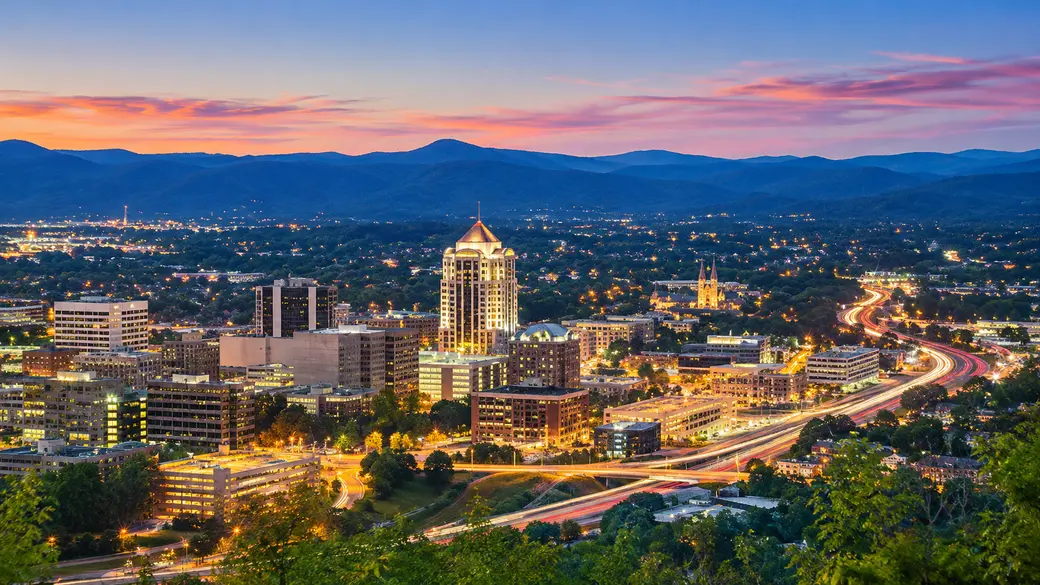
A Roanoke commute is primarily car-based, and Roanoke County workers reported a 21.8-minute mean travel time to work in the 2024 American Community Survey five-year estimates. Roanoke is an independent city, while Roanoke County is a separate surrounding jurisdiction, so the address you choose can affect both your route and daily routine. This Roanoke commute guide outlines driving, transit, remote-work, and low-car options for newcomers.
Roanoke Commute Quick Reference
Average one-way commute: 21.8 minutes in Roanoke County and 19.0 minutes in the City of Roanoke. Source: U.S. Census Bureau American Community Survey, 2024 five-year estimates.
Drive-alone share: 76.6% of Roanoke County workers and 74.9% of City of Roanoke workers.
Work-from-home share: 15.4% of Roanoke County workers and 11.8% of City of Roanoke workers.
I-81 construction: The widening project between Exits 143 and 150 is underway, with completion expected in summer 2031 (Virginia Department of Transportation).
How People Get Around Roanoke
Cars handle most Roanoke-area commutes, particularly for trips between Roanoke County neighborhoods, the City of Roanoke, medical campuses, schools, and retail corridors. I-581 and U.S. 220 form the main north-south connection through central Roanoke, while I-81 carries regional traffic through the valley. Route 419, commonly called Electric Road, is an important southwest Roanoke County corridor, and U.S. 460 supports many east-west trips.
Road conditions can shift with weather, school traffic, crashes, and construction activity. The Virginia Department of Transportation reports that the I-81 widening between Exits 143 and 150 is underway, with periodic nighttime lane closures from 9 p.m. to 6 a.m., traffic shifts, and ramps that may be narrowed at Exits 143, 146, and 150. The southbound Exit 143 ramp toward I-581 has also operated with a one-lane merge toward Roanoke. Completion is expected in summer 2031, so these conditions are part of the commute for the foreseeable future (Virginia Department of Transportation).
For a move centered on daily travel, compare a prospective address with your workplace, school, grocery route, and recurring appointments. A route that feels short at midday can work very differently during the morning or afternoon peak.
Driving in Roanoke: Key Routes and Rush-Hour Reality
Driving is usually the most practical way to commute around Roanoke County and the City of Roanoke. I-581 and U.S. 220 serve central Roanoke, I-81 is the regional north-south route, Route 419/Electric Road carries substantial southwest valley traffic, and U.S. 460/Orange Avenue supports east-west movement.
Travel time varies by departure point, weather, school schedules, crashes, and work-zone activity. The I-81 segment between Exits 143 and 150 requires special attention because widening work can bring traffic shifts, narrowed ramps, and nighttime lane closures. Electric Road often moves more slowly near its commercial intersections, while I-581, U.S. 220, and U.S. 460 can become less predictable during common weekday travel periods.
A useful newcomer strategy is to test two routes from any prospective home at your normal departure time, including the drive to your specific worksite. For example, a household relying on I-81 should identify an in-town alternative before a crash or work-zone change turns one freeway route into a longer trip. This is especially helpful when comparing homes in the City of Roanoke with locations farther out in Roanoke County, and browsing homes currently for sale in Roanoke alongside your route tests makes the comparison concrete.
Public Transit Options in Roanoke
Public transit in Roanoke centers on Valley Metro's fixed-route bus network and Third Street Station in Downtown Roanoke. Service is most useful for people whose homes, jobs, and errands fall near established city routes. Lower-density areas of Roanoke County generally remain more convenient for drivers.
The free Star Line Trolley connects destinations along Jefferson Street between Downtown Roanoke and Carilion Roanoke Memorial Hospital, running from 7 a.m. to 7 p.m. on weekdays with service every 20 minutes. Valley Metro also operates the Smart Way, a regional bus service that links the Roanoke Valley with neighboring areas for a $4 fare each way. MetroFLX provides door-to-door microtransit when regular fixed-route buses are not operating, including late evenings and Sundays.
Roanoke does not have light rail, commuter rail, or ferry service. Valley Metro also provides S.T.A.R. paratransit for eligible riders who cannot use regular buses. For many county residents, transit can supplement a car rather than replace one, particularly where routes, schedules, or destinations do not align with a daily commute.
Best Areas in Roanoke for a Short Commute
Downtown Roanoke: This City of Roanoke area is well suited to downtown employees, Star Line Trolley riders, and workers who want access to Third Street Station and central city streets. Downtown Roanoke offers the most walkable setting for short daily trips.
Jefferson Street corridor neighborhoods: Established in-town neighborhoods near the Star Line route can work well for people commuting to Carilion Roanoke Memorial Hospital and nearby medical destinations.
Southwest city neighborhoods: These established areas suit commuters seeking access to downtown, southwest city destinations, and Route 419 connections.
Roanoke County communities near I-81 and U.S. 220: County locations with quick highway access can suit households whose routines involve regional destinations, though the I-81 construction zone deserves a test drive before you commit.
Biking, Walking, and Micro-Mobility in Roanoke
Walking and biking are most practical for selected, address-specific Roanoke commutes. Downtown Roanoke and several established city neighborhoods can make short trips and errands easier on foot or by bike, while much of Roanoke County remains more practical for drivers.
The Roanoke River Greenway provides an off-road connection for some cycling and walking trips. Downtown and other in-town neighborhoods can be more workable for combining errands with walking or biking than lower-density locations farther from the city core.
Car-free commuting still has limits. Hills, gaps in dedicated cycling infrastructure, summer heat, and the distance between many employment centers can make a vehicle necessary. Buyers who hope to reduce driving should assess the exact route from a property to work, groceries, schools, and healthcare rather than relying on a broad citywide impression.
Commute Comparison: City of Roanoke vs Roanoke County
| Area | Average Commute Time (min) | Drive-Alone Share (%) | Work-From-Home Share (%) |
|---|---|---|---|
| City of Roanoke | 19.0 | 74.9 | 11.8 |
| Roanoke County | 21.8 | 76.6 | 15.4 |
Source: U.S. Census Bureau American Community Survey, 2024 five-year estimates.
Working From Home in Roanoke
Working from home makes a daily highway commute less important, but it can make home-office space and dependable connectivity more important. In Roanoke County, 15.4% of workers reported working from home in the 2024 ACS five-year estimates, compared with 11.8% in the City of Roanoke.
For occasional work outside the house, The Quarters in Downtown Roanoke offers coworking space, and downtown cafes are commonly used for informal work sessions. The City of Roanoke reports multiple broadband providers and a Roanoke Valley Broadband Authority fiber ring extending more than 95 miles across the regional network, as reported by the city.
Remote-work flexibility can expand where buyers consider living, but reliable internet and access to recurring in-person destinations should remain part of the home search. Newcomers who are still deciding between settings can find more context in this guide to settling into the Roanoke area.
Pro-Tip: Test your preferred route at the exact time you expect to leave on two separate weekdays. I-81 work-zone changes, school traffic, and crashes can make one day's drive look very different from another.
FAQ
What is the average commute time in Roanoke?
Roanoke County's mean travel time to work was 21.8 minutes in the 2024 ACS five-year estimates. The City of Roanoke reported a shorter 19.0-minute mean, though the best location depends on the exact worksite and route.
Does Roanoke have good public transportation?
Roanoke's transit network is most useful near Valley Metro routes, Downtown Roanoke, the hospital corridor, and Smart Way regional connections. Fixed-route service is less practical in many lower-density parts of Roanoke County, where driving usually provides more flexibility.
What are the worst roads or highways to avoid during rush hour in Roanoke?
I-81 between Exits 143 and 150 deserves close attention because active widening work, expected to continue until summer 2031, can affect lane patterns and ramp access. I-581, U.S. 220, Electric Road, and busy sections of U.S. 460 can also slow during weekday commute periods.
Which neighborhoods in Roanoke have the shortest commutes?
Downtown Roanoke and in-town neighborhoods near the hospital corridor can reduce travel time for many central-city and medical workers. The right choice changes with the job location because an I-81 commute may favor a different starting point than a downtown commute.
Can I live in Roanoke without a car?
It is possible in specific settings, particularly around Downtown Roanoke, where the Star Line Trolley, Third Street Station, and walkable errands can cover many daily needs. Hills, limited bike infrastructure, and the distance to some employment centers mean most households still keep at least one vehicle, so test the exact route from any address before deciding.
Talk Through Your Commute Before You Choose a Home
Where you live can add or subtract meaningful time from your daily routine. Norm Pullen of NSR REALTY TEAM has been a REALTOR® since 2014 and holds a Virginia Real Estate Broker's license. He helps buyers weigh commute, housing, and budget priorities across Roanoke, and The Roanoke Times and The Roanoker Magazine have voted him Best Real Estate Agent multiple times since 2016.
To discuss a location that fits your commute needs, call or text (540) 330-6906, email norm@nsrrealty.com, or use the contact page.
Categories
Recent Posts








Realtor® | Team Lead | Broker Supervising Broker 0225279843
+1(540) 330-6906 | norm@nsrrealty.com